SOLAS: SAFETY OF LIFE AT SEA
The International Framework That Keeps Ships and Seafarers Safe
The sea is one of the world's most important transportation routes, but operating a ship involves complex risks. Fire, collision, grounding, flooding, machinery failure, cargo hazards, severe weather, and emergencies can threaten the lives of everyone onboard.
To establish internationally agreed safety standards, the maritime industry relies on SOLAS — the International Convention for the Safety of Life at Sea.
SOLAS establishes minimum requirements for the construction, equipment, and operation of ships, helping ensure that vessels are designed and operated with safety at the centre.
For seafarers, SOLAS is not simply a convention found in a training manual. Its requirements influence everyday activities on board—from navigation and firefighting to life-saving appliances, radio communications, cargo operations, and emergency preparedness.

What Is SOLAS?
SOLAS stands for the International Convention for the Safety of Life at Sea.
It is one of the most important international maritime safety conventions and is administered through the International Maritime Organization (IMO).
The convention establishes minimum safety requirements for ships, including standards relating to:
- Ship construction
- Stability and subdivision
- Fire protection
- Life-saving appliances
- Radio communications
- Navigation
- Cargo carriage
- Safety management
- Security
- Additional requirements for certain ship types and operating environments
The objective is straightforward:
To protect life at sea through internationally recognized safety standards.
Why Is SOLAS Important?
A ship is a highly complex operating environment. Hundreds of people may depend on its structural integrity, machinery, navigation systems, emergency equipment, and crew competence.
SOLAS helps create a common safety framework so that ships operating internationally meet established minimum standards.
The convention covers both the technical condition of the vessel and important aspects of its safe operation.
This means safety begins long before a ship leaves port.
It starts with the design and construction of the vessel and continues throughout its operational life through inspections, maintenance, training, drills, and certification.
CHAPTER I — GENERAL PROVISIONS
Chapter I deals with important requirements relating to survey, inspection, and certification of ships.
Ships covered by SOLAS are subject to surveys and inspections to verify that applicable requirements are being met.
Certificates demonstrate compliance with relevant safety standards.
This system is important because safety standards must not only exist on paper—they need to be verified in practice.
CHAPTER II-1 — CONSTRUCTION, SUBDIVISION, STABILITY, MACHINERY & ELECTRICAL INSTALLATIONS
This chapter focuses on fundamental aspects of ship construction and machinery safety.
It covers areas including:
- Subdivision
- Watertight integrity
- Stability
- Machinery installations
- Electrical installations
- Essential services
The principle of watertight subdivision is particularly important because appropriate subdivision can help limit the spread of flooding following damage.
Machinery and electrical systems must also be designed and maintained to support safe vessel operation.
CHAPTER II-2 — FIRE PROTECTION, FIRE DETECTION & FIRE EXTINCTION
Fire is one of the most serious emergencies that can occur onboard.
Chapter II-2 establishes requirements relating to:
- Fire prevention
- Fire detection
- Fire containment
- Fire extinction
- Structural fire protection
- Escape arrangements
Ships are equipped with various firefighting systems and appliances, including fire detection systems, extinguishers, fire hoses, fixed firefighting installations, fire pumps, and fireman's outfits as applicable.
But equipment alone cannot guarantee safety.
Training + Equipment + Quick Response = Effective Fire Safety
Regular drills help crew members understand their emergency responsibilities and muster arrangements.
CHAPTER III — LIFE-SAVING APPLIANCES & ARRANGEMENTS
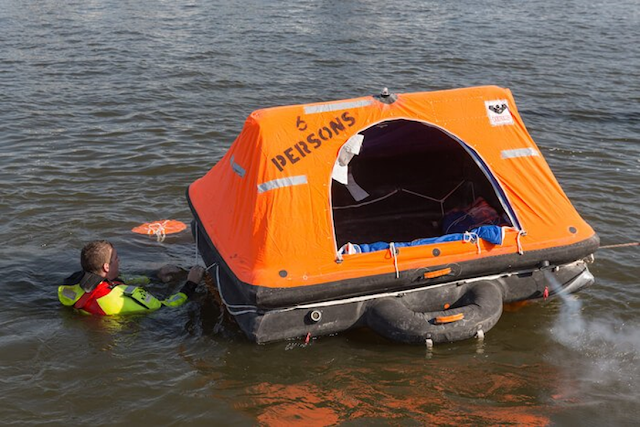
When abandoning ship becomes necessary, life-saving appliances can become the final means of survival.
Chapter III covers requirements for equipment and arrangements such as:
- Lifeboats
- Liferafts
- Lifejackets
- Lifebuoys
- Launching appliances
- Rescue boats
- Emergency equipment
The effectiveness of this equipment depends on proper maintenance, inspection, familiarization, and crew training.
A seafarer should know:
Where the equipment is → How it works → When it is used → What their emergency role is.
CHAPTER IV — RADIO COMMUNICATIONS
Communication can be critical during a maritime emergency.
Chapter IV addresses the Global Maritime Distress and Safety System (GMDSS) and associated radio communication requirements.
Modern ships use systems that can support:
- Distress alerts
- Search and rescue coordination
- Maritime safety information
- Ship-to-ship communication
- Ship-to-shore communication
Equipment such as VHF, Digital Selective Calling, satellite communication systems, EPIRBs, and other GMDSS equipment forms part of the broader maritime emergency communication framework, according to the vessel's applicable requirements and sea area.
The goal is to make sure that a vessel in distress can raise the alarm and obtain assistance as quickly as possible.
CHAPTER V — SAFETY OF NAVIGATION
Chapter V focuses on navigational safety.
It includes requirements associated with:
- Passage planning
- Navigational equipment
- Bridge procedures
- AIS
- Radar
- Voyage information
- Meteorological information
- Search and rescue-related arrangements
Modern navigation relies heavily on electronic systems, but technology must always be supported by competent watchkeeping and professional judgment.
A deck officer must continuously maintain situational awareness and ensure that the vessel follows a safe passage plan.
CHAPTER VI — CARRIAGE OF CARGOES

Cargo can create significant risks if it is not properly packaged, loaded, secured, or documented.
Chapter VI establishes requirements concerning the carriage of cargoes, including appropriate handling, stowage, and securing arrangements.
Cargo operations can affect:
- Stability
- Structural strength
- Trim
- Safe navigation
- Crew safety
For certain cargoes, additional specialized international requirements apply.
Proper cargo planning therefore begins before the first package or container is loaded.
CHAPTER IX — MANAGEMENT FOR THE SAFE OPERATION OF SHIPS
Technical equipment alone cannot create a strong safety culture.
Chapter IX makes the International Safety Management (ISM) Code mandatory for applicable ships and companies.
The ISM framework promotes:
- Safe operating procedures
- Risk management
- Emergency preparedness
- Reporting systems
- Maintenance
- Continuous improvement
- Safety and environmental protection
It establishes a structured approach to managing safety both ashore and onboard.
CHAPTER X — SAFETY MEASURES FOR HIGH-SPEED CRAFT
High-speed craft have operational characteristics that differ from conventional merchant ships.
Chapter X addresses safety requirements for these vessels through the applicable High-Speed Craft Code.
The requirements consider the special design, operational, navigational, and safety characteristics associated with high-speed craft.
CHAPTER XI-1 — SPECIAL MEASURES TO ENHANCE MARITIME SAFETY
Chapter XI-1 contains additional measures designed to strengthen maritime safety.
These include requirements associated with areas such as:
- Enhanced survey arrangements
- Identification numbers
- Port State Control-related measures
- Other specific safety requirements
The chapter complements the broader safety framework established by the other SOLAS chapters.
CHAPTER XI-2 — SPECIAL MEASURES TO ENHANCE MARITIME SECURITY
Safety and security are closely connected, but they are not the same thing.
Chapter XI-2 addresses maritime security and makes the International Ship and Port Facility Security (ISPS) Code mandatory.
It addresses measures designed to protect ships and port facilities against security threats.
Security procedures can include:
- Access control
- Security levels
- Ship security plans
- Port facility security
- Identification and monitoring
- Security communications
CHAPTER XII — ADDITIONAL SAFETY MEASURES FOR BULK CARRIERS
Bulk carriers transport large quantities of cargo such as:
- Iron ore
- Coal
- Grain
- Bauxite
- Other dry bulk commodities
The structural design and loading patterns of these ships create specific safety considerations.
Chapter XII introduces additional safety measures for bulk carriers, particularly in relation to structural integrity and operational safety.
CHAPTER XIII — VERIFICATION OF COMPLIANCE
Chapter XIII establishes a framework for verification of compliance with SOLAS requirements through the IMO Member State Audit Scheme.
Verification is important because international conventions require mechanisms that help assess how effectively their requirements are being implemented.
CHAPTER XIV — SAFETY MEASURES FOR SHIPS OPERATING IN POLAR WATERS
Operating in Arctic and Antarctic waters presents unique challenges.
Ships may encounter:
- Ice
- Extreme cold
- Limited infrastructure
- Poor visibility
- Remote operating areas
- Difficult search-and-rescue conditions
Chapter XIV makes the Polar Code mandatory under SOLAS for relevant safety matters concerning ships operating in polar waters.
Special preparation, equipment, procedures, and operational considerations are essential in these environments.
CHAPTER XV — SAFETY MEASURES FOR SHIPS CARRYING INDUSTRIAL PERSONNEL
Modern offshore projects increasingly involve personnel being transported to and from offshore installations and energy facilities.
Chapter XV establishes safety requirements for ships carrying industrial personnel, including personnel engaged in offshore and related activities.
This chapter reflects the changing nature of maritime and offshore operations and the need to ensure that people working in these environments are transported safely.
SOLAS AND THE SEAFARER

SOLAS may appear to be a collection of technical requirements, but its ultimate purpose is human safety.
Every seafarer contributes to SOLAS compliance through daily actions.
This includes:
- Conducting proper watchkeeping
- Following emergency procedures
- Maintaining safety equipment
- Participating in drills
- Reporting hazards
- Following cargo procedures
- Maintaining navigation standards
- Using communication equipment correctly
- Keeping records accurately
- Following the vessel's Safety Management System
A regulation becomes effective only when it is translated into safe behaviour onboard.
SOLAS AND EMERGENCY PREPAREDNESS
Emergency drills are one of the most practical ways SOLAS safety requirements become part of everyday shipboard life.
Crew members may participate in drills involving:
🔥 Fire
🚨 General emergency
🛟 Abandon ship
📡 Communication emergencies
🌊 Damage control
⚓ Other vessel-specific scenarios
Drills help transform theoretical knowledge into practical response.
When a real emergency occurs, there may be no time to learn what to do.
Training must happen before the emergency.
SOLAS IN THE FUTURE
Shipping is becoming increasingly digital, automated, environmentally conscious, and technologically advanced.
Future safety challenges will involve not only traditional maritime hazards but also:
- Increasing automation
- Cybersecurity
- Alternative fuels
- Complex electrical systems
- Autonomous and remotely supported operations
- Extreme weather
- New ship designs
SOLAS will continue to evolve alongside these changes.
The fundamental principle, however, remains unchanged:
Safety of life must remain at the heart of ship operations.
CONCLUSION
SOLAS provides one of the world's most important international frameworks for maritime safety.
From ship construction and fire protection to life-saving appliances, radio communications, navigation, cargo, safety management, security, polar operations, and industrial personnel, its requirements influence almost every aspect of safe ship operation.
For seafarers, knowing SOLAS means more than memorizing chapter numbers.
It means understanding why safety procedures exist and how individual actions contribute to protecting lives at sea.

Comments
Post a Comment